Website Revamp
A closer look at how great ideas take shape one story at a time.

Project Description
I am a dedicated UX writer and meticulous keyword researcher, committed to enhancing digital journeys and maximizing online visibility.
With a passion for language and a keen eye for user experience, I specialize in rewriting copy and optimizing content to elevate the online presence of brands and businesses. My approach is rooted in understanding the needs and behaviors of users, ensuring that every word resonates and every page flows effortlessly.
Within this portfolio, you'll discover a collection of projects where I've applied my expertise to enhance the user experience and drive organic traffic. From crafting compelling product descriptions that captivate audiences to optimizing landing pages for maximum conversions, each piece demonstrates my commitment to excellence and attention to detail.
But it's not just about writing impactful copy—it's about leveraging data to inform every decision. Through thorough keyword research and analysis, I uncover valuable insights that shape content strategies and boost search engine rankings. My ability to seamlessly integrate SEO principles into engaging narratives ensures that brands not only connect with their audience but also stand out in a crowded digital landscape.
Project Goals
Enhance User Experience (UX): The primary goal could be to revamp the website's content across various pages to ensure that it is user-friendly, engaging, and intuitive. This might involve rewriting copy, optimizing language for clarity and conciseness, and structuring content to guide users seamlessly through their journey on the website.
Improve SEO Performance: Leveraging your keyword research expertise, another goal could be to optimize the website's content for search engines. This involves identifying relevant keywords and integrating them strategically into the copy to improve search engine rankings, drive organic traffic, and increase visibility among the target audience.
Increase User Engagement: By crafting compelling and relevant content, the aim could be to increase user engagement metrics such as time spent on the website, page views, and conversion rates. This might involve creating captivating headlines, persuasive call-to-action (CTA) buttons, and informative product descriptions to encourage user interaction and ultimately, drive conversions.
Expand Reach and Audience: Utilizing SEO-friendly content and engaging copywriting, the project could aim to expand the website's reach and attract a broader audience. This might involve targeting specific demographics or user segments through tailored messaging and content optimization to appeal to their interests and needs.
Establish Thought Leadership: Through informative and authoritative content, the project could aim to position the website as a trusted source within its industry or niche. This could involve creating insightful blog posts, white papers, or case studies that showcase the website's expertise and provide value to its audience, ultimately enhancing brand credibility and reputation.
Project Risks and Challenges
Scope Creep: There's a risk of the project scope expanding beyond the initial plan, leading to delays and additional resource allocation.
Lack of Stakeholder Alignment: If stakeholders have conflicting priorities or expectations, it may result in misunderstandings and difficulties in decision-making.
Technical Limitations: Technical constraints within the website's infrastructure or content management system could hinder the implementation of certain changes or optimizations.
Resource Constraints: Limited availability of resources such as time, budget, or skilled personnel may impact the project's progress and ability to meet deadlines.
Algorithm Changes: Search engine algorithm updates could affect the effectiveness of SEO strategies, requiring adjustments to keyword research and content optimization efforts.
User Feedback Challenges: Gathering meaningful user feedback for A/B testing or user experience improvements may be challenging, especially if the website has low traffic or engagement levels.
Content Quality Issues: Ensuring the quality and consistency of revised content across multiple pages may pose a challenge, particularly if there are multiple content contributors or outdated information.
Data Privacy and Security: Handling sensitive user data or implementing tracking tools for performance monitoring may raise concerns about data privacy and security compliance.
Resistance to Change: Resistance from internal stakeholders or team members to adopt new processes or implement recommended changes could slow down the project's progress.
External Dependencies: Reliance on third-party vendors or external partners for technical support or content creation may introduce dependencies and potential delays if issues arise.
Lessons Learned
Clear Communication: Effective communication with stakeholders and team members is crucial for ensuring alignment on project goals, objectives, and expectations.
Agile Approach: Adopting an agile project management approach can help in responding to changes and challenges more efficiently throughout the project lifecycle.
User-Centric Focus: Prioritizing user needs and preferences in the content revamp process is essential for creating a positive user experience and driving engagement.
Continuous Optimization: Recognizing that website optimization is an ongoing process and that regular monitoring and adjustments are necessary to maintain performance and relevance.
Data-Driven Decision Making: Leveraging data and analytics to inform decisions and measure outcomes is critical for evaluating the effectiveness of strategies and tactics implemented during the project.
Collaborative Effort: Acknowledging the importance of cross-functional collaboration and leveraging the expertise of team members with diverse skill sets to achieve project objectives.
Flexibility and Adaptability: Being prepared to adapt to changing circumstances and requirements, and maintaining flexibility in project plans and timelines.
Documentation and Knowledge Sharing: Documenting project activities, lessons learned, and best practices facilitates knowledge sharing and helps in improving processes for future projects.
Risk Management: Proactively identifying and mitigating risks throughout the project lifecycle is essential for minimizing their impact on project success.
Celebrating Successes: Taking the time to acknowledge and celebrate project milestones and successes with the project team fosters motivation and morale.
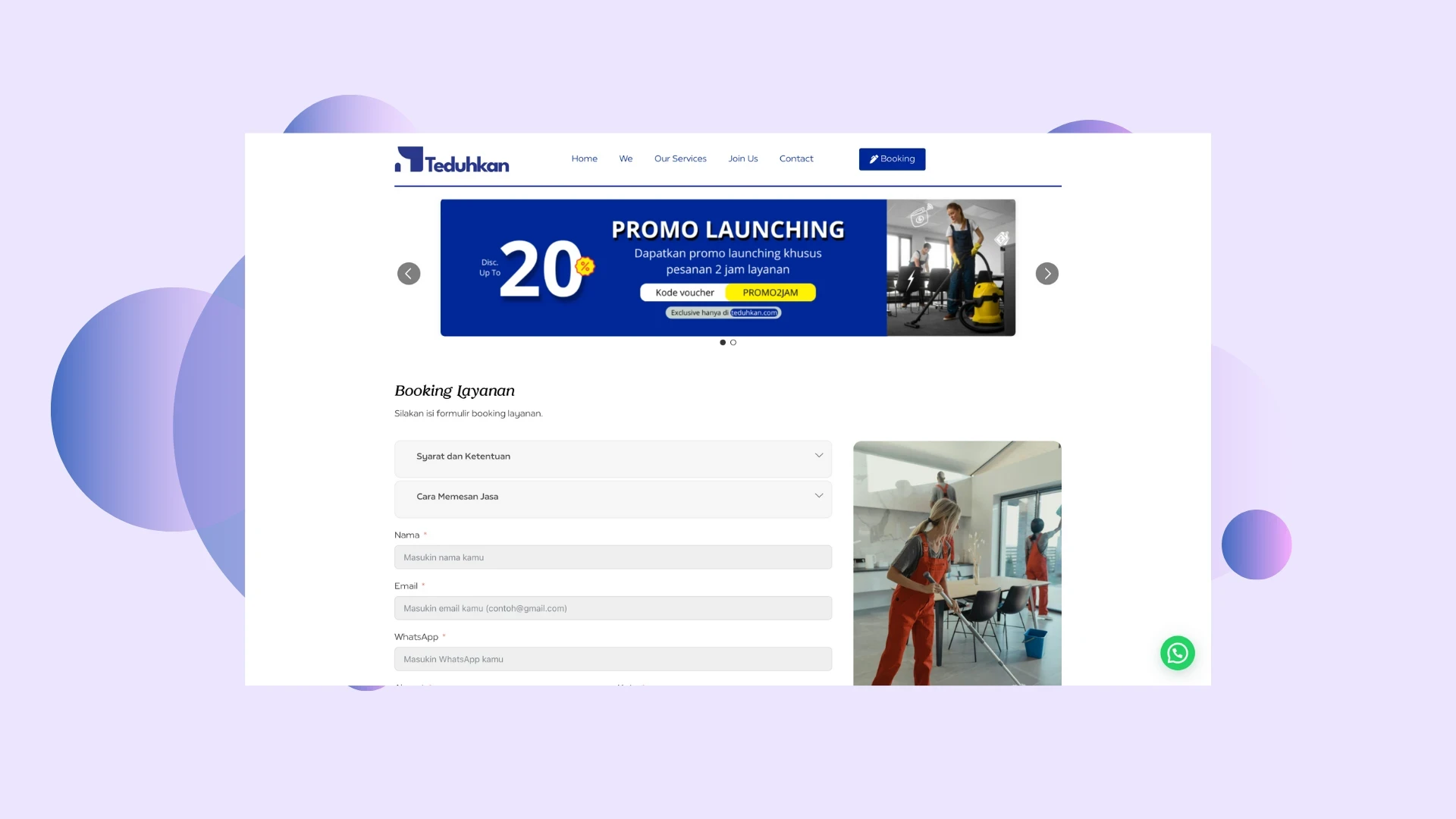
Project Description
The booking page revamp for Teduhkan.com was a user-experience-focused project designed to simplify the service ordering process and reduce friction for potential customers. As the sole contributor, I handled every aspect of the project—starting from UX problem identification and flow restructuring, to designing the new layout, rewriting the content, and implementing the changes.
Prior to the revamp, users often dropped off midway through the booking process due to confusing navigation, unclear service descriptions, and an overwhelming amount of input fields. The new booking page was redesigned with clarity, simplicity, and mobile responsiveness in mind—prioritizing ease of use and conversion.
This project reflects my ability to identify usability issues and deliver UX-driven solutions that translate directly into improved user satisfaction and business performance.
Project Goals
Streamline the Booking Experience
Simplify the process to minimize user effort and reduce drop-off by redesigning the booking flow with fewer steps and clearer options.Clarify Service Information
Rewrite service descriptions, pricing, and instructions to ensure transparency and build user trust before checkout.Improve Mobile Usability
Optimize layout and interaction for mobile users, ensuring fast loading, easy scrolling, and thumb-friendly form inputs.Boost Conversion Rates
Encourage more users to complete the booking process through strategic layout, persuasive microcopy, and trust signals (e.g., testimonials, security badges, clear pricing).Reduce User Support Dependency
Create a self-explanatory interface that reduces the need for manual assistance or customer support for basic questions.
Project Risks and Challenges
User Drop-Off in Funnel
Existing friction points in the original booking flow required deep analysis of user behavior to pinpoint exact causes of abandonment.Balancing Simplicity and Detail
Stripping down unnecessary fields without losing essential service customization options was a constant balancing act.Limited Data on User Pain Points
Without extensive session recordings or heatmaps, design decisions had to be informed by logic, UX heuristics, and limited feedback.Mobile Responsiveness Constraints
Ensuring the new design functioned well across a range of devices and screen sizes required extra iterations and responsive testing.Maintaining Brand Voice
The simplified experience had to remain aligned with Teduhkan's friendly, warm, and trustworthy tone.
Lessons Learned
Less Is More in UX
Reducing cognitive load and steps in the booking process dramatically improved clarity and encouraged task completion.Copy Is Part of UX
Small changes in form labels, error messages, and button text had a major impact on user confidence and flow.Mobile-First Design Wins
Prioritizing mobile usability from the start helped eliminate common friction points for the majority of users accessing from smartphones.Design Without Data Requires Empathy
In the absence of robust analytics, empathizing with users and testing flows manually was critical to identifying UX gaps.Iterate Quickly, Launch Fast
Getting a functional MVP version live early allowed for real-world user testing and faster feedback loops.Conversion-Focused Pages Are Never "Done"
Every interaction—form submission, scroll depth, or hesitation—is a potential insight for future improvements.